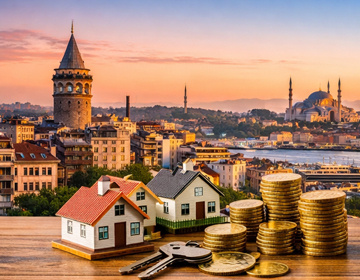

Why Serious Investors Are Looking at Turkish Land Before the Next Development Wave
While apartment sales dominate the headlines, land transactions in Turkey grew by approximately 18% in volume between 2023 and 2025 — a figure that quietly tells a more interesting story. Foreign buyers who secured agricultural and residential plots in Antalya's inland districts five years ago have seen land values in some sub-markets double, driven by infrastructure expansion, tourism growth, and urbanization pressure. Land in Turkey does not generate rental income the way a finished apartment does, but for investors with a 5–10 year horizon, the capital appreciation potential — combined with relatively low entry costs compared to finished property — makes it one of the more asymmetric bets available in the current market.
As of May 2026, Turkey remains one of the few countries in Europe and the Middle East where foreigners can freely purchase undeveloped land, subject to specific zoning and legal conditions. For those who understand the mechanics, this is not a secondary option to buying apartments — it is a distinct investment category with its own risk-reward profile. For a broader view of the Turkish property market before examining land specifically, our guide on why Turkey property searches are trending again in 2026 provides useful context.
Opportunity Angle: Investors with $150,000–$400,000 budgets who cannot yet reach the $400,000 citizenship threshold through a single apartment purchase may find land parcels in growth corridors a credible alternative strategy for capital accumulation.
The Real Reasons Land in Turkey Outperforms Over Time
Units with a very modern and stunning style in the heart of IstanbulTurkey's geography creates structural demand for land that is difficult to replicate in most European markets. The country's population of approximately 85 million is urbanizing rapidly, with metropolitan Istanbul, Ankara, and İzmir absorbing internal migration while simultaneously attracting foreign nationals and digital nomads. This population pressure is a direct driver of land value appreciation in peri-urban zones — the areas just outside established city boundaries where zoning reclassification from agricultural to residential or commercial can multiply plot values overnight.
Turkey's tourism sector adds another dimension. The country hosted approximately 57 million foreign visitors in 2024, with numbers trending upward in 2025 and into 2026. Coastal provinces like Muğla (home to Bodrum and Marmaris), Antalya, and İzmir's Çeşme peninsula continue to attract hospitality developers, villa project operators, and boutique resort investors. Land near these tourism corridors carries a premium, but even secondary coastal locations are seeing consistent appreciation as prime areas become fully built out. In our recent client transactions, we are seeing strong interest from Gulf-based investors specifically targeting Aegean coastal land as a hedge against the increasingly crowded Dubai market.
The country's ongoing infrastructure investment program — spanning new highway connections, expanded airport capacity, and urban renewal zones — consistently unlocks value in previously overlooked land parcels. Areas that were considered peripheral five years ago now sit inside functional commuter belts. This is precisely where expert local guidance becomes critical, because identifying which undeveloped corridor receives infrastructure priority next requires on-the-ground intelligence that no online listing portal can provide.
Opportunity Angle: Investors targeting Antalya's northern expansion zones or İzmir's metropolitan fringe are currently entering before the next infrastructure cycle fully prices in — a window that historically closes within 18–24 months of project groundbreaking.
Types of Land for Sale in Turkey: What Each Category Actually Means
Luxury living in Istanbul's Kartal district with stunning sea views, sky gardens, and prime retail spacesThe distinction between land types in Turkey is not just administrative — it directly determines what you can build, how quickly you can develop, and what your exit options look like. Before purchasing any plot, understanding the zoning classification is the single most important due diligence step.
- Residential Land (İmarlı Arsa): Carries approved construction permits for housing. This is the most straightforward category for investors planning to develop villas, apartment complexes, or residential communities. Found in expanding suburban areas and developing coastal towns, residential plots typically command the highest price per square meter among undeveloped land types, but they also carry the clearest development timeline and exit strategy.
- Commercial Land: Designated for hotels, office developments, retail centers, or mixed-use tourism facilities. Typically located in central urban zones or high-traffic tourism corridors. Investors targeting the hospitality sector in Bodrum or Antalya often start here, though permitting processes can be complex and benefit from professional project management.
- Agricultural Land (Tarım Arazisi): Generally the most affordable category, suited for farming operations, greenhouses, orchards, or organic production ventures. Building rights on agricultural land are significantly restricted under Turkish law — you cannot simply purchase an agricultural plot and construct a villa without rezoning approval, which is a separate legal process with no guarantee of success. Buying agricultural land in Turkey makes sense for income-generating farming operations or as a speculative long-term hold in areas where future rezoning is plausible.
- Tourism Land: Specifically allocated for resort development, holiday villages, or boutique hotel projects. Often located in coastal destinations with existing tourism infrastructure. Investors searching for Turkey beach land for sale will frequently encounter plots within official tourism zones, which come with defined development parameters set by the Ministry of Culture and Tourism.
- Forest-Adjacent and Heritage Zone Land: Subject to strict restrictions. Building is generally prohibited on or immediately adjacent to state forest land. Any plot near a heritage or archaeological zone carries additional permitting requirements that can significantly extend development timelines.
Each category operates under different rules set by municipal master plans (İmar Planı) and national land registry regulations. Confirming the zoning status directly with the relevant municipality and obtaining a certified copy of the land registry document (Tapu) before any transaction is non-negotiable.
Opportunity Angle: Agricultural plots adjacent to expanding residential zones in cities like Bursa, Sakarya, and Eskişehir represent speculative upside plays where rezoning probability is relatively high, entry prices remain low, and holding costs are minimal.
Legal Framework for Foreign Land Buyers in Turkey
Experience Unmatched Panoramic Sea Views at our Luxurious PropertyTurkey has one of the more open foreign ownership frameworks in the region, but several specific restrictions apply to land purchases that do not affect standard apartment transactions. Foreign nationals need to understand these clearly before committing capital.
First, foreigners cannot purchase land or property in military zones, strategic security areas, or within certain distances of military installations. The boundaries of these restricted zones are not always obvious from a map inspection, which is why a formal military clearance check (conducted through the land registry office) is a standard part of every transaction. This check typically adds a few weeks to the closing timeline but is mandatory.
Second, the total landholding of a foreign individual across all of Turkey cannot exceed 30 hectares. For the vast majority of private investors, this limit is unlikely to become a constraint, but corporate structures used by investment groups should be structured with this ceiling in mind.
Third, if a foreign buyer purchases land in a location designated as a special zone — including certain agricultural preservation areas or coastal protection belts — additional government approvals may be required. The scope of these approvals varies by province and has been subject to regulatory updates, so current legal counsel is essential rather than relying on procedures that applied in previous years.
The title deed process (Tapu transfer) follows the same general framework as apartment purchases: both parties must appear before the land registry directorate (Tapu Müdürlüğü), a certified property valuation must be obtained, and applicable taxes must be paid. Foreign buyers also need a Turkish tax identification number, which is straightforward to obtain. Domirel advisors are currently recommending that all foreign clients work with an independent Turkish notary and a licensed real estate attorney simultaneously — not because problems are common, but because the cost of legal oversight is negligible relative to the investment size and the consequences of a title dispute are severe.
For investors also considering residency or citizenship pathways, it is worth knowing that a raw land purchase alone does not qualify toward the $400,000 Turkey citizenship by investment threshold unless a development project with specific conditions is structured correctly. Our dedicated guide on Istanbul visa requirements for property investors covers the citizenship and residency pathways in detail.
Opportunity Angle: Many buyers shy away from land precisely because of perceived legal complexity, which means less competition at the negotiation table. Investors with proper legal support can often secure land at 10–20% below comparable market value simply because sellers struggle to find qualified foreign buyers.
Where Smart Investors Are Buying Now
As of May 2026, the most active land investment corridors in Turkey are concentrated in three distinct zones. The first is Antalya's northern and eastern periphery — specifically the districts connecting the city center toward Kepez, Döşemealtı, and the Aksu corridor near the airport. Infrastructure investment here has been consistent, land prices remain in the $80–$180 per square meter range for residential-zoned plots depending on location and access, and demand from both domestic developers and Gulf-based investors is accelerating. The short-term rental market in greater Antalya is expanding beyond the traditional beach zones, creating development demand for mid-market residential communities within commuting distance of the city.
The second active zone is Istanbul's Thrace corridor — specifically the areas along the Northern Marmara Highway connecting Silivri, Çerkezköy, and Tekirdağ. Istanbul's urban sprawl has been pushing consistently westward and northwestward for over a decade, and land in these corridors is still priced well below equivalent distances on the Asian side of the city. Plots zoned for residential development in Silivri are trading at approximately $120–$250 per square meter as of May 2026, compared to $400–$800 per square meter in more established suburban districts like Beylikdüzü. The third zone is Muğla province's secondary coastal towns — Datça, Akyaka, and the inland areas behind Bodrum — where a combination of limited buildable land supply, growing boutique tourism demand, and an influx of remote workers is creating steady appreciation pressure. For investors looking at finished property in comparable Istanbul locations, projects like RAMS Park House Maslak in Sarıyer illustrate the premium that fully developed assets command in established districts — useful context for understanding the development value gap that raw land investment seeks to capture.
Opportunity Angle: Investors who act during market corrections typically secure the best long-term deals. The current period — where Turkish lira stabilization is improving foreign buyer purchasing power — represents exactly this type of entry window for land purchases in growth corridors.
Best Land and Property Types in the Current Market
For investors whose primary goal is capital appreciation over 5–10 years, residential-zoned land in confirmed infrastructure corridors currently offers the clearest risk-managed opportunity in the Turkish market. Entry prices are lower than finished property, holding costs (annual land tax) are modest, and the exit market — selling to domestic developers — is active in high-demand corridors. Expected capital appreciation in well-selected plots has ranged from 40–120% over five-year periods in the corridors described above, though past performance in any specific sub-market does not guarantee future results.
For investors who need income from day one or are targeting the $400,000 citizenship threshold, finished apartments or villa projects remain the more direct route. Istanbul's European-side districts and premium Asian-side addresses like Ümraniye are showing strong rental yields of 5–8% annually as of May 2026, with capital appreciation layered on top. Properties like the Verdant Aura Residences in Ümraniye (from $650,000) and Kiler GYO Referans Beşiktaş (from $660,000) represent the type of finished, income-generating assets that complement a land investment strategy — either as the primary citizenship vehicle or as a yield-generating holding while a land development project matures. For those interested in understanding Istanbul's most investment-active neighborhoods in detail, our guide to the best Istanbul neighborhoods for foreign property investment in 2026 provides district-by-district analysis.
Opportunity Angle: Our on-the-ground team notes that the most sophisticated buyers right now are allocating 60–70% of their Turkey real estate budget to citizenship-qualifying finished property and 30–40% to strategic land positions in secondary cities and coastal corridors.
Who Should Invest in Turkish Land Now vs Who Should Wait
Long-Term Capital Growth Investors (5–10 Year Horizon): This is the clearest fit for land investment in Turkey. If you have patient capital, do not need rental income from the asset, and are comfortable with the legal due diligence process, residential or tourism-zoned land in growth corridors offers one of the best risk-adjusted return profiles available in the current market. Budget $100,000–$500,000 for a meaningful position, allocate 3–5% of purchase value for legal and transaction costs, and hold through at least one full infrastructure and development cycle. This investor profile should act now — entry conditions in the key corridors are favorable and widening interest from institutional buyers suggests the window for private investor pricing will not remain open indefinitely. At Domirel, we help investors identify these windows before they close.
Citizenship-by-Investment Buyers: Land alone is generally not the right vehicle for achieving Turkish citizenship. The $400,000 minimum threshold requires a property purchase structured in a way that qualifies under current TAPU and valuation rules, and raw land purchases face additional scrutiny in this context. Citizenship buyers should prioritize finished residential property or off-plan projects from established developers where the valuation and title structure is designed to meet citizenship criteria. Land can be purchased separately as a supplementary investment, but it should not be the primary citizenship vehicle without very specific legal structuring.
Short-Term Speculators: Land is not suited to a 12–24 month flip strategy in the current market. Liquidity for land is lower than for finished apartments, transaction costs consume a meaningful portion of short-term gains, and development value cannot be realized without a completed project. Investors seeking short-term returns should focus on off-plan apartments in high-demand Istanbul districts where developer payment plans and capital appreciation between purchase and delivery (typically 24–36 months) create a more predictable short-cycle return. The TENET Topkapı Prime project in Fatih (from $400,000) is an example of an off-plan opportunity in a historically strong location where the development timeline and demand fundamentals are clear.
Opportunity Angle: Investors who commit to the right strategy for their profile and act with properly structured legal support consistently outperform those who chase price alone. This is where having a dedicated advisor with current market data makes a measurable difference in outcomes.