
Top 25 Questions About Turkish Citizenship by Investment — Answered for 2026
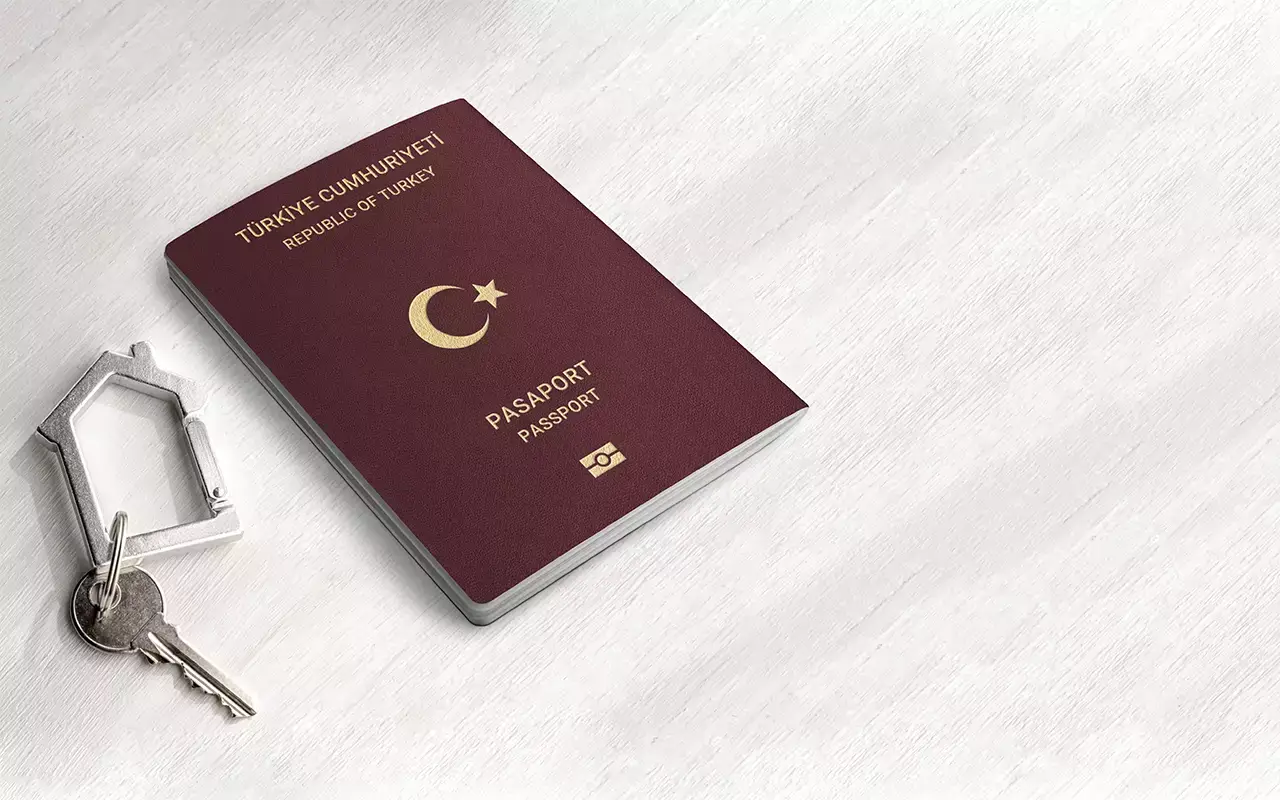
The 25 most important questions about Turkish citizenship by investment, fully updated for May 2026 — from the $400,000 minimum to family eligibility, processing timelines, and which property types qualify.
Most Investors Ask the Wrong Question About Turkish Citizenship
The question most investors start with is: "Is $400,000 enough?" The better question is: "Which $400,000 property actually qualifies?" Turkey issued approximately 60,000 citizenship-by-investment approvals through the property route between 2017 and 2024 — yet a meaningful share of applicants experienced delays or complications not because of budget, but because of documentation errors, ineligible property structures, or missing appraisal procedures. Knowing the right answers before you commit capital is the difference between a 3-month approval and an 18-month headache.
Last updated: May 2026 — verified against current market data and recent transactions.
What this means for investors
Turkish citizenship through real estate remains one of the most accessible passport programs globally at the $400,000 entry point — but eligibility rules are specific and non-negotiable.
Opportunity angle
Investors who understand the process end-to-end secure approvals faster and avoid costly mistakes. This guide gives you that edge.
Where $400,000 Buys Citizenship-Eligible Property in Istanbul
Not every district performs equally for the citizenship track. As of May 2026, the districts attracting the highest volume of citizenship-eligible transactions are Beylikdüzü, Küçükçekmece, Başakşehir, Ataşehir, and Ümraniye. Each offers a different risk-return profile.
Beylikdüzü has emerged as one of the most active zones for new-build citizenship purchases. Prices range from approximately $2,500–$4,200/m² as of May 2026, meaning a well-configured 2+1 or 3+1 apartment at $400,000–$550,000 qualifies comfortably for citizenship while delivering estimated gross rental yields of 6–8% annually. Infrastructure here has matured significantly — the Metrobus line and proximity to the new Canal Istanbul corridor keep demand stable. For a citizenship-eligible entry with capital growth upside, consider Boulevard Istanbul Beylikdüzü (from $546,000) or the Boulevard Istanbul option at $423,000 — both structured within qualifying parameters.
Küçükçekmece sits at $3,000–$5,000/m² and offers strong rental demand driven by a dense working population and proximity to Istanbul's logistics belt. Best Investment Flat in Küçükçekmece at $345,000 represents an entry-level option; stacking two units under one application is permissible, which opens this district for citizenship strategies. Ataşehir, Istanbul's financial district on the Asian side, commands $5,500–$8,500/m² — a single 3+1 apartment here easily clears $400,000 while capturing business-district rental premiums of 7–9%.
What this means for investors
Citizenship-eligible properties are not limited to luxury stock — mid-market districts offer better yield profiles while meeting the threshold.
Opportunity angle
Beylikdüzü and Küçükçekmece offer the strongest combination of citizenship eligibility, rental yield, and capital growth for buyers entering at the $400K–$550K range.
Off-Plan vs Ready Property for the Citizenship Track
Experience unmatched panoramic sea views at our luxurious property
This is one of the most practical decisions citizenship applicants face, and the answer depends on your timeline. Ready (title-deed-issued) properties allow you to initiate the citizenship application almost immediately after purchase — typically within 2–4 weeks of TAPU transfer. Processing at the General Directorate of Land Registry runs 3–5 business days for the annotation. The full citizenship file then takes approximately 3–6 months for approval under standard conditions.
Off-plan properties require a notarized sales contract and a bank-to-bank payment transfer as proof of investment. Critically, the property does not need to have a TAPU issued yet — the contract and appraisal report are sufficient to begin the citizenship application process, as long as the full $400,000 value is confirmed by an SPK-licensed appraisal firm. Off-plan routes carry slightly more documentation burden but can yield 15–25% capital appreciation by completion, making them attractive for investors with a 2–3 year horizon. For a detailed breakdown, see our complete guide to buying off-plan in Turkey.
Domirel advisors are currently recommending off-plan citizenship acquisitions in Beylikdüzü and Başakşehir for clients who want price appreciation baked into their citizenship cost. Ready properties in Ataşehir and Ümraniye suit clients who prioritize speed-to-approval above all else.
What this means for investors
Both off-plan and ready properties qualify for the citizenship route — the choice affects timeline and return profile, not eligibility.
Opportunity angle
Off-plan buyers in 2026 are entering projects at pre-completion prices, with citizenship applications filing within weeks of contract signing and full SPK appraisal.
Citizenship Track vs Long-Term Hold: Two Different Strategies
Luxury living in the heart of Izmir, just steps away from the sea
The citizenship application requires a minimum 3-year hold — you cannot sell before that period without forfeiting citizenship status. This shapes how different investor profiles should approach the market.
Profile 1 — The Passport Optimizer. This investor's primary goal is the Turkish passport for visa-free travel (approximately 110+ countries as of 2026) and as a backup residency plan. They prioritize clean title, fast processing, and low management overhead. A ready apartment in Beylikdüzü or Başakşehir at $400,000–$500,000, rented out through a professional management firm, covers holding costs and delivers 6–7% gross yield during the 3-year lock-in. A Gulf-based client of ours closed on a 3+1 unit in Ataşehir at $486,000 last quarter — citizenship application filed within 3 weeks, rental contract in place within 5 weeks of TAPU transfer.
Profile 2 — The Yield Investor. Citizenship is a secondary benefit. This profile targets 7–9% gross rental yield and 5-year capital growth, typically buying in higher-demand zones like Ataşehir or Ümraniye. The 3-year hold restriction aligns naturally with a medium-term hold strategy. See available options at High-End Family Residences in Ümraniye (from $775,000) for premium positioning.
Profile 3 — The Portfolio Builder. This investor acquires multiple units — potentially across districts — to maximize diversification. Citizenship can be obtained on a single qualifying property; additional units are held for pure investment. Our advisory team has facilitated over 300 foreign buyer transactions since 2020, and portfolio builders consistently achieve the strongest 5-year total returns by mixing one citizenship-track asset with two to three yield-focused acquisitions.
What this means for investors
The 3-year hold is not a constraint — it is a forced holding period that historically benefits disciplined investors in Istanbul's appreciating market.
Opportunity angle
Investors who act during market correction phases typically secure the best long-term deals. Istanbul's current price cycle, as of May 2026, favors entry.
District Price and Yield Comparison — Citizenship-Eligible Zones
| District | Price/m² (May 2026) | Est. Gross Yield | Citizenship Eligible | Best For |
|---|---|---|---|---|
| Beylikdüzü | $2,500–$4,200 | 6–8% | Yes | Yield + citizenship |
| Küçükçekmece | $3,000–$5,000 | 6–8% | Yes | Entry-level citizenship |
| Başakşehir | $3,200–$5,500 | 5–7% | Yes | Family living + citizenship |
| Ataşehir | $5,500–$8,500 | 7–9% | Yes | Premium yield + citizenship |
| Ümraniye | $4,500–$7,500 | 6–8% | Yes | Metro access + business belt |
| Beşiktaş / Şişli | $8,000–$15,000+ | 4–6% | Yes | Capital appreciation focus |
What this means for investors
Mid-market districts deliver superior yield-to-price ratios for citizenship buyers compared to central Istanbul, where capital is absorbed by premium pricing rather than rental income.
Opportunity angle
The difference between a 5% and 8% yield on a $400,000 asset is $12,000 per year in rental income. At Domirel, we help investors identify these windows before they close.
Ready to invest?
Domirel specializes in identifying undervalued opportunities and structuring smart investments. Whether you are a first-time buyer, seasoned investor, or exploring citizenship by investment, our advisors provide personalized guidance backed by real transaction data.
Top 25 Questions About Turkish Citizenship — Answered
Based on Domirel's advisory work in this market in 2025 and into 2026, these are the questions every serious investor asks before committing. We have organized them by theme for clarity.
Eligibility and Basic Requirements
The minimum is $400,000 USD (or equivalent in foreign currency). This threshold was raised from $250,000 in June 2022 and remains in force as of May 2026. The valuation must be confirmed by an SPK-licensed appraisal firm. For a full breakdown of the process, see our guide on Turkish Citizenship by Investment 2026.
Yes. Foreign nationals from most countries are eligible to apply for Turkish citizenship through property investment, capital deposit, job creation, or other approved routes. Nationals of certain countries face restrictions — your advisor will confirm eligibility for your specific nationality.
Nationals of Armenia, Cuba, Cyprus, Nigeria, North Korea, and Syria are currently excluded from acquiring property in Turkey and are therefore ineligible for the property-based citizenship route. This list is subject to change by Presidential Decree.
Yes. Alternative routes include: a fixed capital investment of at least $500,000, a bank deposit of at least $500,000 held for three years, creating employment for at least 50 Turkish citizens, or purchasing government bonds worth at least $500,000. Real estate remains the most popular route due to its tangibility and dual investment-plus-citizenship benefit.
No. The investment-based citizenship route does not require prior residency in Turkey. You can apply directly after completing the qualifying investment, without needing to live in Turkey for any period beforehand.
The Application Process
Core documents include: valid passport, birth certificate (apostilled and translated), marriage certificate if applicable, SPK-licensed property appraisal report, TAPU (title deed) or notarized sales contract for off-plan, bank transfer receipts proving payment, and biometric photos. Additional documents may be requested case by case. Our guide on TAPU in Turkey covers the title deed process in full detail.
Under current processing conditions (May 2026), the standard timeline is approximately 3 to 6 months from the date of complete file submission. Straightforward applications with clean documentation have been approved in as little as 90 days in our recent client transactions. Delays typically result from incomplete document packages or apostille issues.
Not necessarily. You can grant power of attorney to a licensed Turkish lawyer to handle the entire application on your behalf. You will need to be present for biometric data submission at some stage, but most of the process can be managed remotely.
Applications are submitted to the General Directorate of Land Registry and Cadastre for the property annotation step, and then to the General Directorate of Population and Citizenship Affairs for the full citizenship file. Many applicants use authorized law firms to coordinate both submissions.
Yes, under certain conditions. Off-plan purchases supported by a notarized sales contract and full bank-to-bank payment proof, confirmed by an SPK appraisal report, can serve as the basis for a citizenship application. The TAPU does not need to be issued yet — but the payment and appraisal documentation must be complete.
Family Inclusion and Rights
Yes. The principal applicant's spouse and children under the age of 18 are included in the same citizenship application at no additional investment requirement. This is one of the most valuable aspects of the Turkish citizenship program compared to competing programs globally.
No. Parents are not included in the citizenship by investment application. Only the spouse and minor children qualify under the primary applicant's investment threshold.
Turkish citizens have the right to live and work in Turkey without restriction, access the Turkish national education and healthcare systems, own property without limitation, vote in elections, hold a Turkish passport, and pass citizenship to their children by birth. Dual nationality is generally permitted — Turkey does not require you to renounce your original citizenship in most cases.
Yes. Children born to a Turkish citizen father or mother automatically acquire Turkish citizenship at birth, regardless of the country of birth. This generational benefit is a key long-term advantage of obtaining Turkish citizenship.
Property Requirements and Restrictions
Residential apartments, villas, and commercial properties (offices, shops, warehouses) all qualify — note that bare land/plots do NOT qualify for the citizenship program, provided the total value meets or exceeds $400,000 as confirmed by an SPK appraisal. The property must be purchased from a Turkish citizen or Turkish company — not from another foreigner — to be citizenship-eligible.
Yes. You can combine the value of two or more properties purchased simultaneously (or within the same application window) to reach the $400,000 threshold. Each property must have its own appraisal report, and the combined appraised value must meet or exceed $400,000.
Joint ownership is possible, but only if your individual share of the property values $400,000 or more. A joint purchase where your 50% share equals $300,000 would not qualify. The threshold applies to your ownership share, not the total property price.
Yes. You must retain ownership of the qualifying property for a minimum of three years from the date of citizenship approval. Selling before the 3-year period can result in the revocation of Turkish citizenship. After three years, you are free to sell with no impact on your citizenship status.
No. There is no geographic restriction on where the qualifying property must be located. Properties across all Turkish cities and regions are eligible, provided they meet the valuation threshold and other documentation requirements. Istanbul remains the most popular choice due to liquidity, rental demand, and capital appreciation history.
All payments must be made by bank transfer (havale/EFT) from your personal or company bank account — cash payments do not qualify. For off-plan properties, installment payments are acceptable provided the total contracted amount reaches $400,000 and is fully documented with bank transfer receipts. A useful resource is our guide on opening a bank account in Turkey as a foreigner.
Financial Considerations
Foreign buyers purchasing property in Turkey using foreign-sourced funds (currency brought into Turkey from abroad) are exempt from VAT (KDV) on new residential and commercial property purchases — provided they meet the conditions of the exemption. This is a significant saving of 1–20% depending on the property type. Full details are covered in our VAT exemption guide.
Buyers should budget for: title deed transfer tax (approximately 4% of declared value, often split or negotiated with the seller), SPK appraisal fee (approximately $300–$600), notary and translation fees, legal fees if using a lawyer (typically 1–1.5% of property value), and property insurance. Total acquisition costs typically range from 5–8% above the purchase price.
The $400,000 must be paid from the investor's own funds — a Turkish bank mortgage on the qualifying property does not count toward the citizenship threshold. However, you can use your own savings in combination with equity from other assets. For buyers using financing creatively, our mortgage and financing guide for foreign buyers covers all available structures.
As of May 2026, gross rental yields on citizenship-eligible apartments in Istanbul range from approximately 5% to 9% depending on district, property type, and furnishing level. Ataşehir and Ümraniye lead at 7–9%; Başakşehir and Beylikdüzü deliver 6–8%. Our on-the-ground team notes that the most sophisticated buyers right now are selecting furnished units in high-demand zones to maximize short-term rental income during the mandatory 3-year hold period.
Your citizenship is not affected by subsequent changes in market value. The $400,000 threshold applies at the time of purchase and is verified by the SPK appraisal report submitted with your application. A later price adjustment has no legal bearing on your citizenship status, provided you comply with the 3-year retention requirement.
Frequently Asked Questions
How much do I need to invest for Turkish citizenship in 2026?
The minimum is $400,000 USD in real estate, confirmed by an SPK-licensed appraisal report. This threshold has been in place since June 2022 and remains current as of May 2026. You can combine multiple properties to reach this figure, provided each purchase is properly documented with bank transfer receipts.
How long does Turkish citizenship by investment take to process?
Under current conditions (May 2026), well-prepared applications are processed in approximately 3 to 6 months. Applications with complete, apostilled documentation have been approved in as little as 90 days. Delays are almost always tied to documentation gaps, not processing capacity.
Does my family get Turkish citizenship with my investment?
Yes. Your spouse and children under 18 are included in the same citizenship application under your qualifying investment — no additional capital is required. Parents and adult children are not eligible under the same application.
Can I sell my property after getting Turkish citizenship?
You must hold the qualifying property for a minimum of 3 years from citizenship approval. Selling before that window can result in citizenship revocation. After 3 years, the property can be sold freely with no impact on your citizenship status.
Which Istanbul districts are best for citizenship-eligible property investment?
As of May 2026, Beylikdüzü, Küçükçekmece, Başakşehir, Ataşehir, and Ümraniye are the top-performing districts for citizenship-eligible purchases. Beylikdüzü offers the best yield-to-price ratio (6–8% gross yield at $2,500–$4,200/m²); Ataşehir delivers premium yields of 7–9% with stronger capital appreciation history. The right district depends on whether you prioritize yield, growth, or speed of rental income.
Further Reading
Domirel Advisory
Want to see your own numbers?
Use our investment calculator to model rental yield, tax exposure, and five-year returns for any property in Istanbul.




Comments
Be the first to share your thoughts
Add a Comment
Comments are reviewed before publishing.
🔒 Your information is secure with us